
Introduction
The story of my life starts with migration. I am a dual citizen of Canada and the US born to refugee parents who fled Vietnam in search of freedom and opportunity. Since I was little, I witnessed how language barriers, poverty, and unfamiliar cultures curtailed my family’s capacity to participate civically. These childhood experiences cultivated my understanding of the direct impact of policy decisions on people’s dignity, representation, and opportunities.
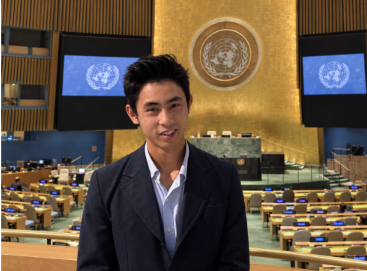
This is why I’m incredibly honoured to have attended the United Nations’ 2026 International Migration Review Forum (IMRF) at the UN Headquarters in New York this past May. Here, we reviewed the progress (local to global levels) on the implementation of the Global Compact for Safe, Orderly, and Regular Migration (GCM) within the UN framework since the last review in 2018. For context, the GCM is the first intergovernmental agreement negotiated under the UN to establish a non-binding cooperative framework for improving global migration governance. Adopted in 2018, it outlines 23 objectives to address the challenges and maximize the benefits of human mobility while explicitly respecting national sovereignty.
Context
I received this honour through the Young Politicians of Canada (YPC) in which I was chosen as one of their four Canadian delegates to attend. Studying in Montreal last year through Fulbright Canada, I got involved with YPC, interested in its mission as a national, non-partisan, youth-led non-profit organization dedicated to engaging Canadians aged 14 to 24 in the democratic process. Through its goals of empowering young Canadians to participate in public policy discussion, civic leadership, and political advocacy, I met many passionate students hosting many events for political discourse on domestic and international issues with perspectives from all political ideologies.
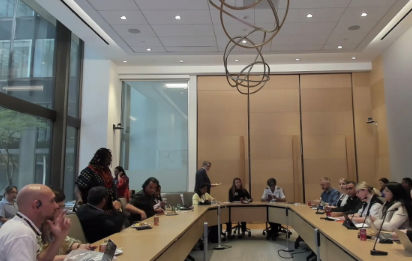
In preparation for the forum, I held numerous informal consultation sessions with youth in Canada to better understand lived experiences with migration policies. Talking with international students, temporary workers, youth from backgrounds of displacement and diaspora, I explored issues of migration, refugee integration, and international student issues, synthesizing all of their perspectives to contribute to global dialogue at the IMRF forum.
Consultations with Canadian Youth
Across these consultations, I noticed several common concerns regarding the gap between migration policies and the lived realities of young Canadians. International students highlighted the financial challenges of rising tuition and living expenses, uncertainty regarding study permits, and hardships in navigating pathways to employment and permanent residency. Some also recounted long immigration processing delays and limited communication from government authorities, disrupting their education and causing unexpected financial burdens. Others emphasized how language barriers, notably in accessing services and employment opportunities, complicated their integration into society. These experiences taught me how administrative decisions can deeply shape young migrants’ financial stability, educational opportunities, and sense of belonging.
When I talked to youth from refugee and diaspora backgrounds, our conversations taught me the lasting consequences of displacement across generations. Participants discussed the need for accessible mental health services, educational opportunities, and community support in helping newcomers rebuild their lives. Others highlighted concerns about discrimination, the lack of culturally and linguistically accessible resources, and the continued vulnerability of some diaspora communities to threats outside of national borders. While they all came from different backgrounds, the participants were united in stressing migration policies that recognize migrants not simply through their legal status, but as people with aspirations, identities, and fundamental rights. These conversations deepened my belief that meaningful migration governance cannot stop at just discussions of migrants at the policymaking table but they must also ensure that their voices actively inform the decisions affecting their lives.
In addition to my individual consultations, I also held stakeholder consultations with my YPC delegation team in meeting with non-profit organizations, such as representatives from Amnesty International, MOSAIC, and the Migrant Workers Centre, across Canada to understand the institutional and legal challenges in migration.
Experience within the forum
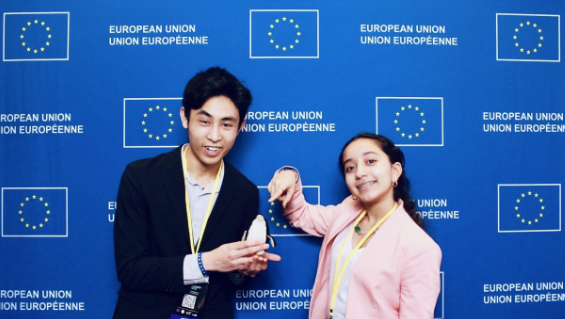
During the forum, I had the privilege of meeting UN officials (including Ambassador Annalena Baerbock as the Office of the President of the UN General Assembly), government representatives, NGOs, civil society organizations, Academics, religious leaders, and international entities from all over the world.
Throughout the sessions, we had meaningful, emotional discussions on different ongoing and historical issues of displacement and refugees, including in Ukraine, Latin America, Myanmar, China, etc. I attended one stakeholder meeting at the UNICEF headquarters in which religious speakers from Latin America came to speak about the hardships and struggles of refugees in leaving their homes but that their faiths continue to guide them in perseverance and in hopes of a better life in their new homes. I also heard from an organization focused on Ukrainian refugees who showed us a presentation recounting a story of a family whose homes were completely demolished by warfare shortly after their departure. As someone born to refugee parents who fled on a boat after the Vietnam War and who sacrificed their lives for my well-being, our discussions touched me personally and I connected deeply with the topics we discussed. I’ll never forget hearing these powerful stories and meeting people fighting everyday to shape justice for migrants and refugees globally.
I was also amazed by the multilingual aspects of the forum as stakeholders and organizations switched between English, Spanish, French, Mandarin, and many other languages with constant interpretation services provided. Language inclusivity was truly incorporated and made much of the information accessible to delegates globally.
Since the forum in May, I have continued to receive invites to attend UN-related events and stakeholder consultations online, including one in July during the 2026 High-Level Political Forum and one recently in October for a stakeholder consultation on the family unity initiative of the GCM. I have happily attended all of them, knowing that justice and change in our migration policymaking doesn’t stop at one international forum.
To this day, I continue to deeply thank all of the countless organizers, students I consulted, stakeholders, UNHQ officials, YPC, and my family for making these experiences possible.
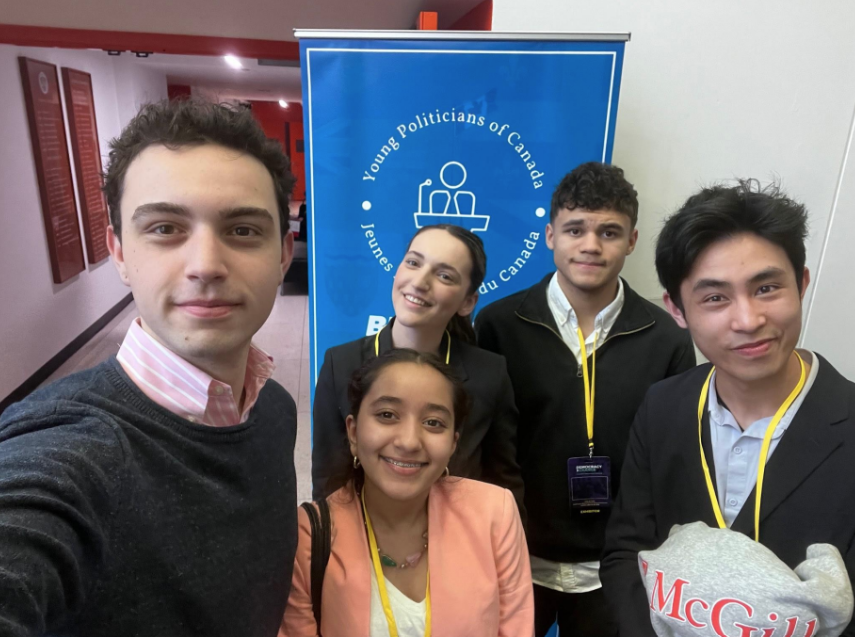
Phillip Pham is a fourth-year undergraduate student at the University of Texas at Austin, majoring in History and Government with a minor in Asian American Studies. Born to refugee parents from Vietnam, he is a dual U.S.-Canadian citizen who has lived in Toronto, Montreal, Dallas, and Austin. As a former intern of U.S. Congresswoman Alexandria-Ocasio Cortez and as a United Nations Delegate at the 2026 International Migration Review Forum, Pham aspires to pursue graduate studies and a public-service career at the intersections of migration, political science, and international affairs.


Leave a Reply